American made drone companies: how to verify one
Three separate tests decide whether an American drone company is actually buyable with federal money: where the airframe is built, who owns the company, and which country the trade agreement recognises. This page sets out how to check each one, and shows the listings in our own catalog that already carry the NDAA flag.
Browse the drone catalog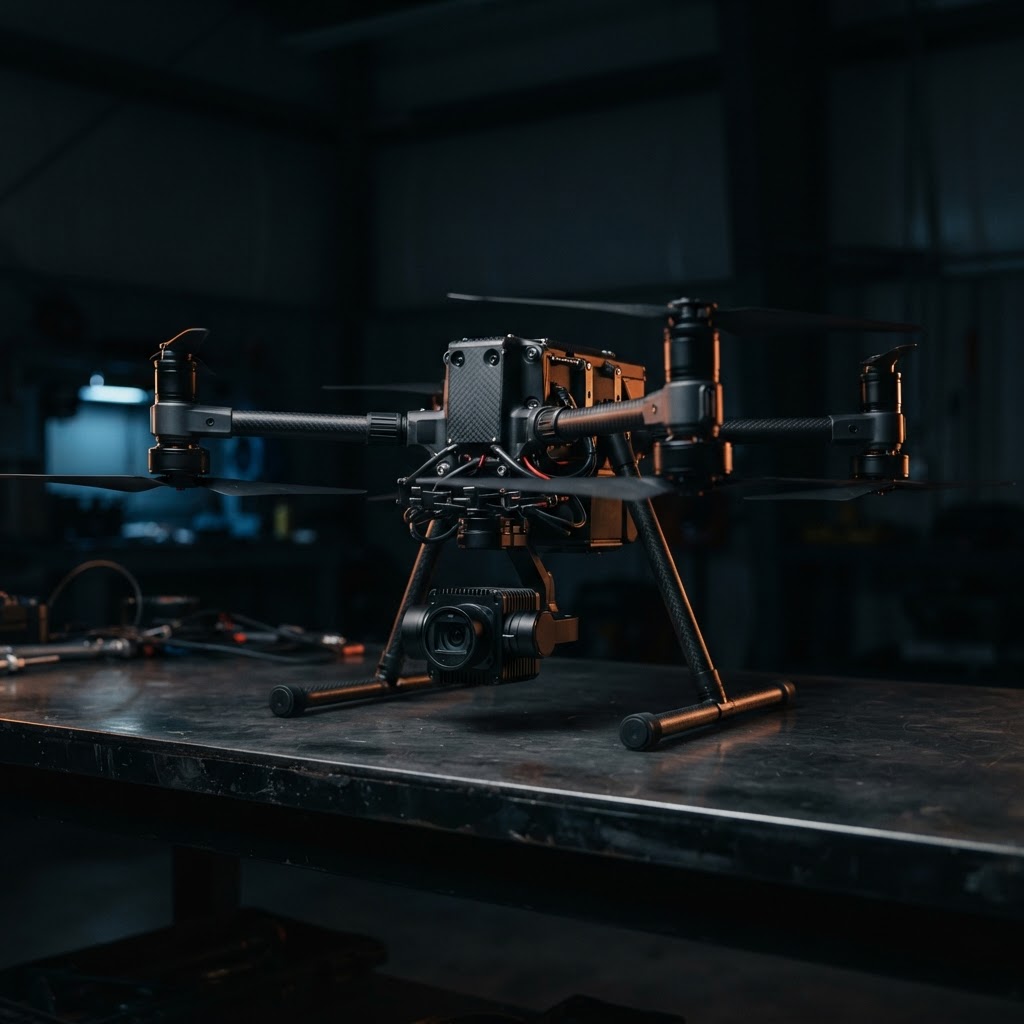
Why “American drone companies” is not one question
American drone companies are routinely described as US-made, NDAA-compliant, TAA-compliant or Blue UAS approved in the same paragraph, as though the terms were interchangeable. For a procurement officer they are not: each one is a different test, run by a different authority, and answered with a different document. A company can build its aircraft in Ohio, be owned by a covered entity, and be unsellable to a federal agency all at once.
The three checks below are the ones that decide whether a drone can be bought with agency money, and they are the same three our team runs before a listing is allowed to carry the NDAA flag — which is why a list of American made drone companies is worth verifying before it is quoted in a requisition.
Ownership and control
Section 889 of the FY2019 NDAA bars federal agencies from buying telecom and video-surveillance equipment from named Chinese manufacturers — and from any entity that owns or is controlled by them. The test is who owns the company today, not where a sticker was applied.
Communications hardware
The FCC's Covered List names equipment that cannot be used in federal networks, and it is updated independently of the NDAA list. A drone whose airframe is American but whose radio module is listed is still a procurement problem.
Country of origin
The Trade Agreements Act requires an article to be wholly obtained or substantially transformed in the US or a designated country. Assembly abroad from domestic parts does not satisfy it, and GSA Schedule purchases require it separately from §889.
The drone manufacturers we carry, and what is flagged
What is this page
A verification reference, not a certification: the three federal tests an aerial purchase has to clear, then the listings in this catalog that already carry the NDAA §889 flag. Compliance is recorded per listing rather than claimed for the store as a whole, so the counts are flagged rows — not a statement about a brand's entire range.
How to read this table
One row per manufacturer, with the number of its listings that carry the flag today. A brand that sells airframes alongside payloads and sensors shows more than one row per aircraft. Use the count to shortlist, then confirm §889 status, TAA country of origin and the FCC Covered List against the exact part number.
| Manufacturer | NDAA §889 flagged listings |
|---|---|
| Inspired Flight | 17 |
| WISPR Systems | 17 |
| MicaSense | 10 |
| ACSL Inc | 9 |
| Freefly | 8 |
| Teledyne FLIR | 7 |
| Sentera | 5 |
| GreenValley International | 3 |
| GeoCue | 1 |
| FoxFury | 1 |
| All 10 manufacturers | 78 |
The flag is not a Made-in-USA certificate. It records that the manufacturer is not a covered entity under Section 889 and is US- or treaty-ally based; country of origin and TAA status are confirmed for the exact SKU in writing before an order is placed. An unflagged listing is unverified rather than non-compliant — brands whose ownership or manufacturing origin we have not confirmed stay unflagged until they document it.
Across the whole catalog 98 of 302 listings are flagged, including hunting and industrial optics. Turn on NDAA §889 compliant in the quick filters of the drone, industrial or hunters catalog to see only those listings.
How to verify a claim in about ten minutes
Every step produces something that can go in the file. If a manufacturer cannot complete the fourth step, the listing is not ready for a federal purchase regardless of what its website says.
Search the entity name against the §889 list
The covered list is published by name, with aliases and parent companies. Search the manufacturer, any former name, and its parent. A row on that list ends the evaluation.
Check the FCC Covered List separately
Look up the airframe, the radio module and the gimbal by model. The FCC list moves on its own schedule, so a manufacturer that cleared §889 last year may still be shipping a listed component.
Ask for the country of origin on that SKU
A manufacturer page describing the company as American is not a country-of-origin statement. Ask for it on the specific part number, with the assembly location named.
Get it in writing on letterhead
A signed §889 representation and a TAA country-of-origin statement, addressed to the buying agency, is what goes in the contract file — a web page and a sales email are not evidence.
Record the answer against the line item
Compliance attaches to the listing, not to the store. Keep the letter with the requisition so a later audit can match the document to the exact model that was bought.
Where this fits in a drone program
Compliance is one of four checks an agency runs before an aircraft is bought — the others are the policy the programme flies under, the budget line that pays for it, and the evidence chain that makes the footage usable. If you are standing up a programme rather than replacing one airframe, start with the public-safety program resource, which carries the policy checklist, the budget checklist and the model policy as downloads.
For the buying mechanics — volume tiers, purchase orders, NET terms and how a quote is routed to the manufacturer — the agency procurement page has the terms. Flight-rule questions live in the drone compliance reference, export restrictions are documented on the export compliance page, and the rule itself is applied camera by camera in the NDAA §889 guide.
Phone support Mon–Fri 9–5 PT.
Questions buyers ask about US-made drones
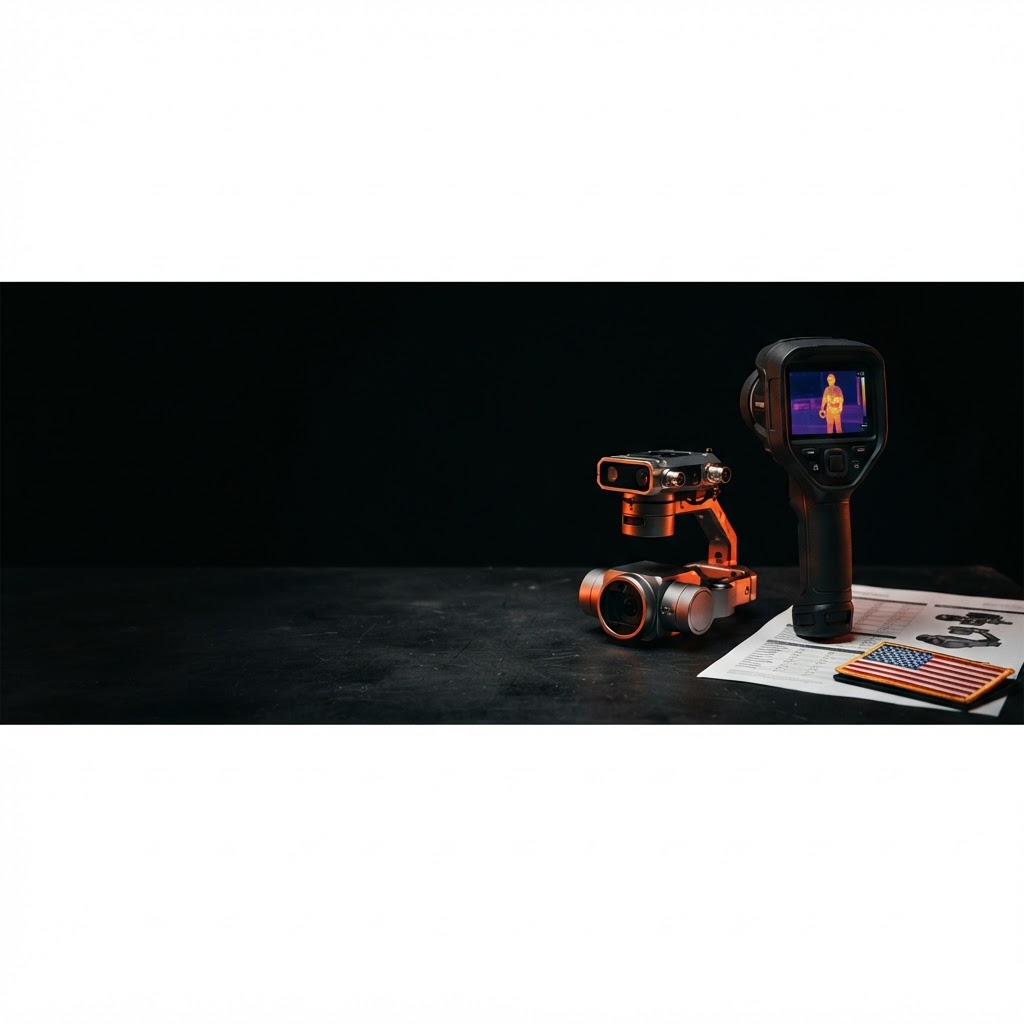
Three separate tests. Country of origin decides whether the airframe was substantially transformed in the United States or a TAA-designated country. Section 889 of the FY2019 NDAA decides whether the manufacturer, or its parent, is a covered entity. The FCC Covered List decides whether the radio and camera hardware may be used on federal networks. A manufacturer can pass one and fail the others, which is why a single US-made badge on a listing is not enough.
No. NDAA Section 889 is a purchasing prohibition aimed at named manufacturers and anything they own or control, so it can clear a drone that was assembled abroad by a non-covered company. Made in USA and TAA country-of-origin rules look at where the product was made instead. A federal buyer usually needs both answered, which is why our listings carry separate NDAA and TAA flags rather than one compliance badge.
78 aerial listings across 10 manufacturers carry the NDAA Section 889 flag as of November 2026, including Inspired Flight, WISPR Systems, MicaSense, ACSL Inc, Freefly, Teledyne FLIR, Sentera, GreenValley International, GeoCue and FoxFury. Across all three divisions the catalog holds 98 flagged listings out of 302, including hunting and industrial optics. The flag can be filtered in any division catalog.
It is recorded per listing, so a drone package is flagged on the aircraft, the gimbal and the sensor together as the manufacturer sells them. If you are pairing a body with a third-party payload yourself, each part needs its own check, because a flagged airframe does not make an unflagged camera compliant.
Ask the manufacturer for a country-of-origin statement naming the exact part number and the country of substantial transformation, in writing, on letterhead. Assembly in the United States from imported components does not satisfy the Trade Agreements Act on its own. TAA status is separate from §889 and is required for GSA Schedule and federal procurement purchases.
An unflagged listing is unverified, not non-compliant. Brands whose ownership or manufacturing origin we have not confirmed in writing stay unflagged until the manufacturer documents it, and we request that documentation before an order is placed. Flagging is a claim we only make once it is supported.
Cite this page
Thermisight Dynamics LLC, “American Made Drone Companies: US-Made & NDAA Verified”, https://thermisighthunters.com/us-made-drone-companies. Last updated November 15, 2026.
Flagged-listing counts are stated as of the update date above and are confirmed per listing on the quote. This page explains how to verify a compliance claim; it is not legal advice, and the determination for a specific purchase rests with the buying agency.
We use cookies for your cart and sign-in, and — with your permission — analytics and ads. Cookie Policy